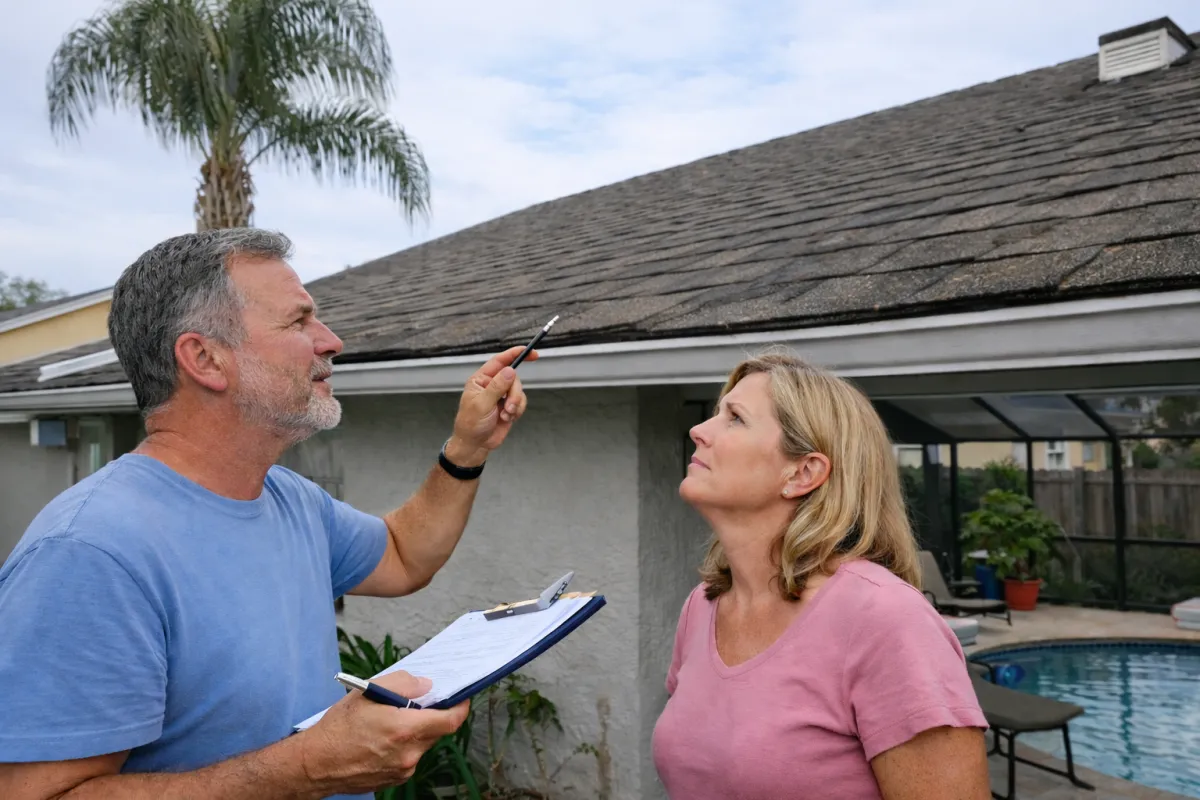
Why Florida Insurance Companies Are Paying More Attention to Your Roof in 2026
If you’re a homeowner in Florida, you’ve probably noticed something:
Insurance companies are asking more questions about your roof than ever before.
And no — it’s not random.
Between hurricanes, rising claim costs, and stricter underwriting guidelines, your roof has become one of the most important factors in determining your home insurance eligibility and premium.
Let’s break down what’s really happening — and what you can do about it.
The Insurance Shift in Florida
Over the last few years, Florida’s property insurance market has tightened dramatically.
Many carriers now:
Require roof inspections before issuing or renewing policies
Limit coverage for roofs over 10–15 years old
Request proof of maintenance
Increase premiums for “aged” roofs
In many cases, even if your roof isn’t leaking, its age alone can trigger underwriting concerns.
That’s the reality homeowners are facing today.
Why Age Matters So Much
Insurance companies look at roofs statistically, not emotionally.
As shingles age, they:
Lose flexibility
Become brittle
Are more vulnerable to wind uplift
Increase the likelihood of claims
From their perspective, an older roof equals higher risk.
But here’s the important part most homeowners don’t realize:
Age does not always mean failure.
There’s a difference between a roof that is old… and a roof that is deteriorating.
The Problem With “Wait Until It Leaks”
Many homeowners adopt the mindset:
“I’ll replace it when I have to.”
The problem?
Insurance companies may force the decision before you’re ready.
We’ve seen cases where:
Policies were non-renewed due to roof age
Replacement was required within 30–60 days
Premiums spiked dramatically
That creates financial pressure — and rushed decisions are never ideal.
Proactive Roof Maintenance Changes the Game
What insurance companies want to see is risk reduction.
When a roof is properly maintained, documented, and treated early in the aging process, it shows responsibility — and in some cases, it can help during inspection reviews.
Preventative strategies include:
Professional roof inspections
Minor repairs before they escalate
Cleaning and algae treatment
Shingle rejuvenation to restore flexibility
When shingles maintain flexibility, they perform better under wind stress — which is critical in Florida.
How Roof Rejuvenation Fits Into the Conversation
For roofs that are aging but structurally sound, rejuvenation treatments can:
Restore lost oils in asphalt shingles
Improve flexibility
Reduce brittleness
Extend functional lifespan
It’s not a cosmetic fix. It’s preventative maintenance.
And in today’s insurance environment, prevention matters more than ever.
What Florida Homeowners Should Do in 2026
If your roof is:
8–15 years old
Not leaking
Structurally intact
But starting to look dry or worn
Now is the time to evaluate your options.
Waiting until an insurance letter arrives limits your flexibility.
Being proactive gives you control.
Final Thoughts
Florida isn’t getting easier on roofs.
Between the climate and the insurance market, homeowners need to think strategically about roof longevity.
A full replacement isn’t always necessary — but ignoring early signs of aging can be costly.
A professional evaluation can help you understand where your roof stands — and what your smartest next step is.


