How to Prepare Your Roof for Hurricane Season in Florida
How to Prepare Your Roof for Hurricane Season in Florida (Before the First Storm Warning)
In Florida, hurricane season isn’t a surprise.
It’s a deadline.
Every year from June through November, homeowners watch the tropics — but many forget to look up. Your roof is your home’s first line of defense, and small vulnerabilities can become major damage once winds pick up.
The good news? Most hurricane roof damage isn’t random. It’s preventable.
Let’s talk about what smart Florida homeowners are doing before the first storm alert hits their phone.
Why Roof Damage Happens During Hurricanes
Contrary to popular belief, roofs don’t usually fail all at once.
They fail at weak points.
During a hurricane, damage typically starts when:
Shingles are already brittle
Seal strips have weakened
Flashing is loose
Previous minor damage was never repaired
The roof deck has soft spots
Once wind gets underneath a compromised shingle, uplift pressure increases — and that’s when sections start tearing off.
In Florida’s climate, aging shingles lose flexibility faster due to UV exposure and heat. When they become brittle, they’re far more likely to crack or detach in high winds.
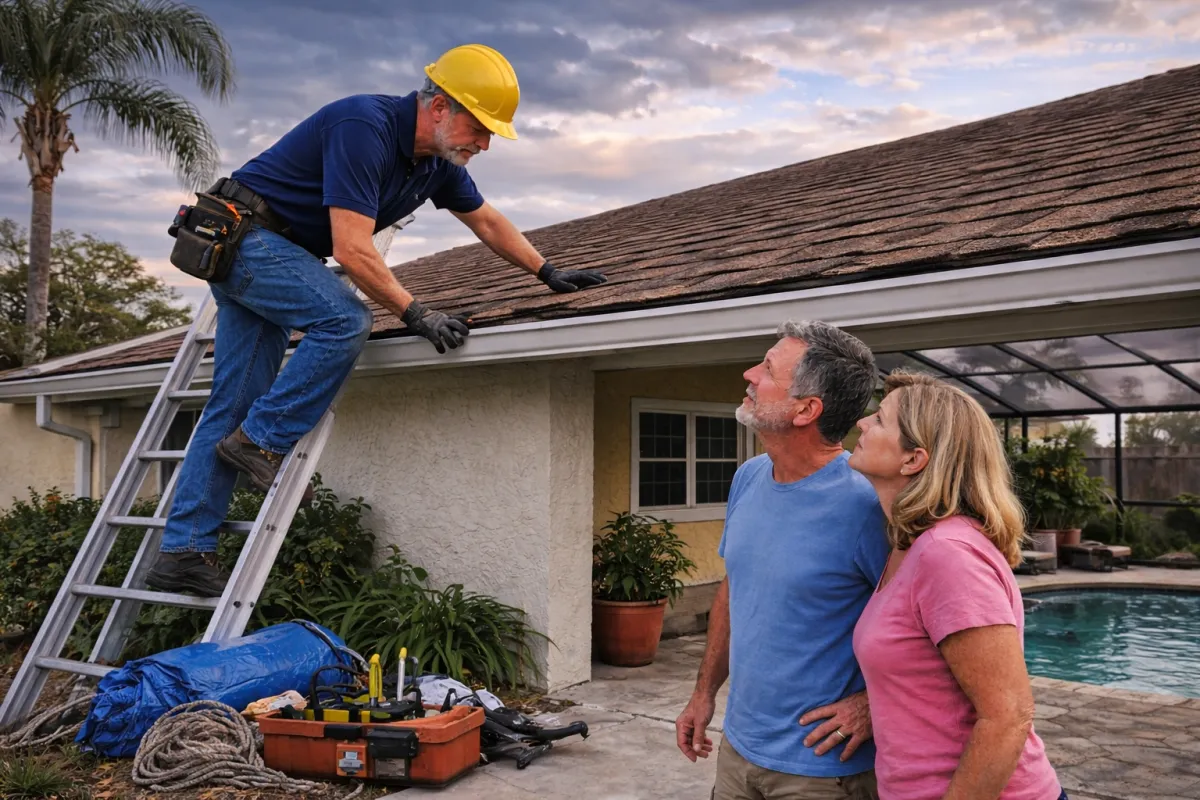
Step 1: Schedule a Pre-Season Roof Inspection
The best time to inspect your roof is before storms are forming.
A professional inspection can identify:
Loose or lifted shingles
Nail pops
Damaged flashing around vents and chimneys
Soft decking areas
Early granule loss
Catching these issues early is significantly cheaper than emergency repairs after a storm.
Step 2: Address Minor Repairs Immediately
Small repairs become large claims during hurricanes.
Replacing a few compromised shingles, resealing flashing, or correcting ventilation issues can dramatically improve wind resistance.
Many insurance claims start with “minor pre-existing wear” that worsened during a storm.
Don’t give wind an entry point.
Step 3: Evaluate Shingle Flexibility
This is something most homeowners never think about.
Asphalt shingles contain oils that keep them flexible. Over time, Florida sun evaporates those oils. When shingles dry out, they lose elasticity.
Brittle shingles crack under pressure.
If your roof is 8–15 years old and structurally sound but showing signs of drying, rejuvenation treatments can help restore flexibility and improve performance before hurricane season.
It’s not cosmetic — it’s preventative.
Step 4: Clean and Clear the Roof Surface
Before hurricane season:
Remove debris
Clean algae buildup
Clear gutters and downspouts
Trim overhanging tree branches
Debris can trap moisture and add weight. Clogged gutters can cause water backup during heavy rainfall.
Preparation isn’t just about wind — it’s also about water management.
Step 5: Document Your Roof Condition
Take clear photos of:
Each slope
Flashing areas
Ridge caps
Penetrations
If a storm does hit, documentation helps support insurance claims and shows pre-storm condition.
This simple step can make a major difference later.
The Cost of Waiting
Emergency roof repairs during hurricane season are:
More expensive
Harder to schedule
Often temporary
Stressful
Proactive homeowners sleep better during storm watches because they’ve already reduced their risk.
Final Thoughts
You can’t control hurricane season.
But you can control how prepared your roof is.
Florida’s weather is aggressive, and roofing systems age faster here than in many other states. The key is staying ahead of deterioration — not reacting to it.
Before the first storm warning, look up.
Your roof should already be ready.


