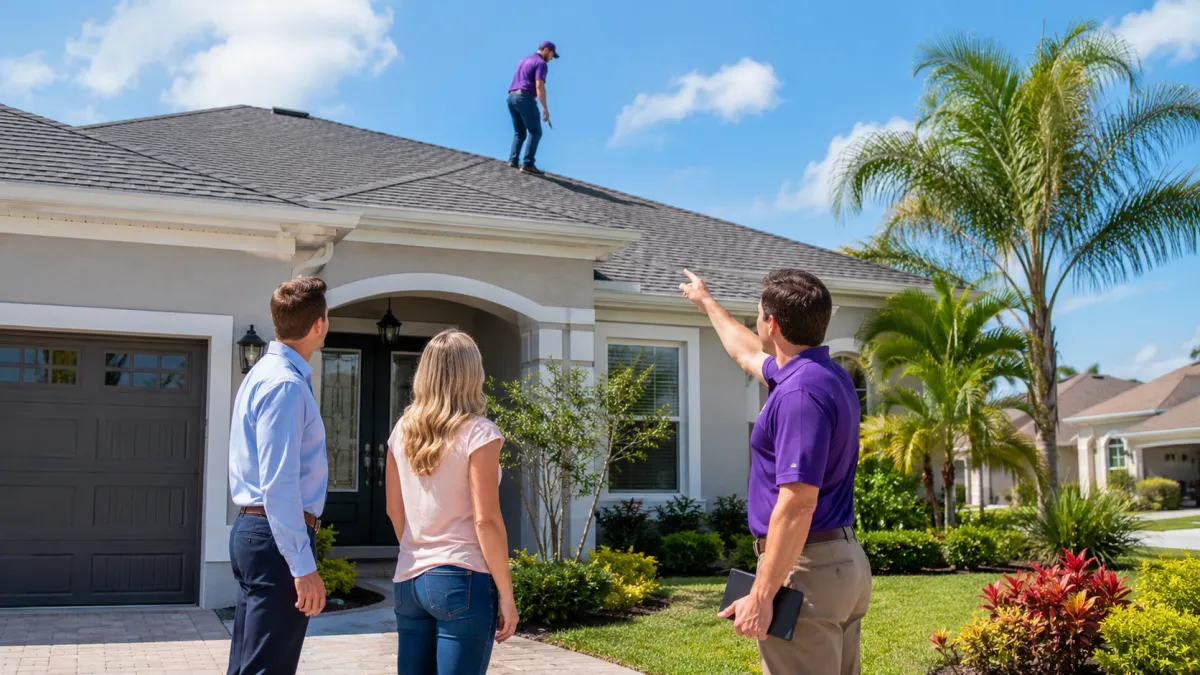
Why Florida Homeowners Should Inspect the Roof Before Listing Their Home
Selling a home in Florida is already a process with many moving parts. There are showings, buyer questions, appraisals, inspections, negotiations, repairs, closing deadlines, and sometimes insurance conversations that become more complicated than expected. In the middle of all of that, one part of the home can create more stress than almost anything else: the roof.
A roof problem discovered late in the sales process can delay a closing, weaken the seller’s negotiating position, or give a buyer a reason to walk away. That is why a pre-listing roof inspection is one of the smartest moves a Florida homeowner can make before putting a property on the market.
Many sellers assume that if the roof is not leaking, there is nothing to worry about. But real estate transactions do not work that way. Buyers are not only looking for active leaks. They are looking for risk. Home inspectors may flag roof age, visible wear, missing shingles, soft areas, flashing concerns, previous repairs, or signs that the roof may need further evaluation. Even if the issue is not catastrophic, it can create doubt.
And doubt can cost money.
Why the roof matters so much during a Florida home sale
The roof is one of the first major systems buyers think about because it is expensive to replace. A buyer may love the kitchen, the layout, the neighborhood, and the backyard, but if they believe the roof is a problem, the entire deal can shift.
In Florida, roof concerns can feel even bigger because buyers are often thinking about weather exposure, hurricane season, insurance, and long-term maintenance costs. A roof that looks old or neglected can make the home feel riskier, even when the rest of the property is in good shape.
That is why sellers should not wait for the buyer’s inspector to be the first person to evaluate the roof. At that point, the seller is reacting. A proactive seller gets information earlier and controls the conversation better.
What a pre-listing roof inspection can reveal
A professional roof inspection before listing can identify concerns such as loose shingles, granule loss, flashing issues, plumbing vent problems, nail pops, previous repair areas, gutter-related water concerns, and early signs of deterioration.
The point is not to create fear. The point is to get clarity.
If the roof is in good condition, the seller gains confidence. If there are small issues, the seller can address them before they become negotiation problems. If the roof needs a larger conversation, the seller can decide how to handle that strategically before the property goes live.
That is far better than being surprised under contract.
Why small roof problems become big negotiation problems
A small roof concern may not be expensive to correct, but when it appears during a buyer inspection, it can feel bigger than it is. Buyers may overestimate the cost. Agents may become cautious. Lenders, insurers, or inspectors may ask additional questions. The seller may feel pressured to offer credits, repairs, or concessions.
This is why timing matters.
If a seller handles a minor issue before listing, it may simply become part of good property preparation. But if the same issue appears after the buyer is emotionally and financially committed to the deal, it can become a point of leverage.
A missing shingle, lifted flashing, or visible wear area may not ruin a roof. But it can absolutely disrupt a transaction if it is discovered at the wrong time.
Why documentation helps sellers
One major benefit of a pre-listing roof inspection is documentation. Sellers who can show that the roof was reviewed by a professional are in a better position than sellers who simply say, “We have never had a problem.”
That does not mean every buyer concern disappears. But it gives the seller a stronger foundation for the conversation.
Documentation may help show the condition of the roof before listing, what issues were found, what was corrected, and what recommendations were made. This can be especially valuable when a buyer inspection raises questions that need context.
In real estate, clarity builds confidence. Uncertainty creates friction.
When roof preservation may be part of the conversation
Not every aging roof needs immediate replacement. That is an important point for sellers.
A roof may show signs of age while still having useful life left. In those cases, a seller may benefit from understanding whether maintenance, targeted repairs, or roof rejuvenation could be relevant. This depends on the condition of the roof, the type of shingle, and whether the roof qualifies for preservation-oriented options.
The key is that the seller should not guess. They should get the roof evaluated and then decide.
That is where Roof Saver Florida can help homeowners avoid making expensive decisions based on pressure or fear.
How Roof Saver Florida helps before listing
Roof Saver Florida can help homeowners understand whether their roof is ready for the selling process. The goal is not to automatically push replacement. The goal is to evaluate the roof, identify weak points, and help the homeowner make a practical decision.
For some homes, that may mean small repairs. For others, it may mean cleaning and maintenance. For some roofs, it may mean exploring preservation solutions. And in certain cases, replacement planning may be necessary.
The difference is that the decision should be based on actual roof condition, not panic.
Final thought
If you are planning to sell your Florida home, do not let the roof become a surprise after the buyer’s inspection. A pre-listing roof inspection gives you clarity, protects your negotiating position, and helps prevent unnecessary delays.
The roof can either become a confidence-builder or a problem. The earlier you evaluate it, the more control you have.
Ready to get clarity on your roof? Visit stoproofreplacement.com to schedule your roof inspection with Roof Saver Florida.
If you want to learn more about Roof Saver Florida and the products behind our roof preservation approach, visit Roofsavermagazine.com.


