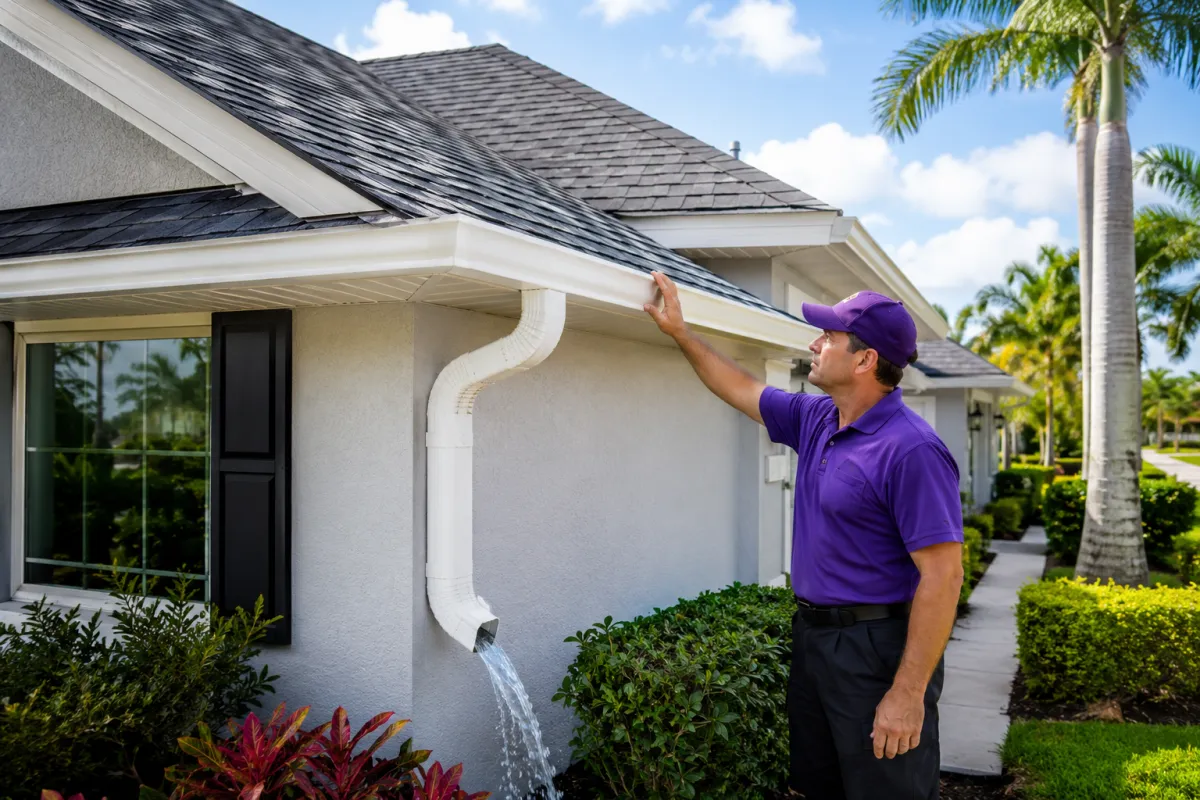
How Gutters Help Protect Your Roof in Florida
Most homeowners think about gutters only when they are clogged, overflowing, or visibly damaged. That is a mistake.
Your gutters are not just an accessory attached to the edge of the roof. They are part of your home’s water management system. When gutters work properly, they help move water away from the roof, fascia, walls, foundation, landscaping, and entry areas. When they fail, water can go places it should not go.
In Florida, that matters because rain is not occasional. Heavy rain is part of the climate. Afternoon storms, tropical systems, and hurricane season can all create large volumes of water in a short amount of time.
If your gutters cannot move that water correctly, your roof may pay the price.
Why gutters matter for roof health
A roof is designed to shed water. But once water reaches the edge of the roof, it still needs a controlled path away from the home.
That is where gutters come in.
Functional gutters help collect water from the roof and direct it through downspouts. This reduces uncontrolled runoff and helps prevent water from backing up around vulnerable areas.
When gutters are clogged, sagging, undersized, or poorly pitched, water can overflow. That overflow may soak fascia boards, run behind gutter lines, damage soffits, splash against siding, pool near the foundation, or contribute to moisture problems around the home.
This is why gutter maintenance is part of roof maintenance.
What happens when gutters are clogged
Clogged gutters are common in Florida, especially around homes with trees, palm debris, pine needles, leaves, and organic buildup.
When gutters clog, water cannot flow properly. Instead, it fills the gutter system and eventually spills over. During heavy rain, that overflow can happen quickly.
Clogged gutters can contribute to:
Fascia damage,
Soffit moisture,
Roof edge deterioration,
Water backup,
Staining,
Landscape erosion,
And potential water intrusion.
The homeowner may think they have a roofing problem, when the original issue was poor drainage.
This is why Roof Saver Florida looks at the roof as a system, not just a surface.
Gutters and roof leaks
Not every roof leak starts in the shingles. Some leaks are related to transitions, edges, penetrations, or drainage failures.
If gutters are clogged or pulling away from the home, water may collect or flow in ways the roof system was not designed to handle. Over time, that can expose weaknesses around the roof edge.
This is especially important during Florida storms. Heavy rain can overwhelm a poorly maintained gutter system. Once water starts backing up or spilling behind the gutter line, the risk of damage increases.
A professional roof inspection should include attention to drainage, gutters, downspouts, and roof edges.
Why Florida gutters need regular attention
Florida conditions create a perfect environment for gutter problems.
Homes deal with frequent rain, organic debris, algae, mildew, tree coverage, and storm debris. Even a clean gutter system can become clogged quickly after a windy storm.
That means homeowners should not treat gutter cleaning as a once-in-a-while task. It should be part of a regular exterior maintenance plan.
Homes with trees near the roof may need more frequent attention. Homes in areas with heavy rainfall or poor drainage may also need more careful inspection.
Signs your gutters may be hurting your roof
Homeowners should watch for warning signs such as:
Water overflowing during rain,
Gutters pulling away from fascia,
Visible sagging,
Standing water inside gutters,
Dark staining on fascia or siding,
Soil erosion near downspouts,
Mildew or moisture near roof edges,
And roof edge deterioration.
These signs should not be ignored. They often indicate that water is not moving where it should.
Gutters, roof preservation, and replacement prevention
At Roof Saver Florida, the goal is not only to respond after a roof fails. The goal is to help homeowners preserve their roof and avoid unnecessary replacement when possible.
Good gutters support that goal.
A roof with poor drainage is under more stress than it should be. Even if the shingles are in decent condition, constant water problems can reduce the roof’s performance over time.
That is why gutter maintenance, roof maintenance, and roof inspection should work together.
If a homeowner is trying to extend roof life, ignoring the gutters makes no sense.
Should gutters be cleaned before hurricane season?
Yes.
Before hurricane season, homeowners should make sure gutters and downspouts are clear and functioning. Heavy rain from storms can test the drainage system quickly. If gutters are already clogged before the storm arrives, they are unlikely to perform well under pressure.
Pre-season gutter preparation should include:
Removing leaves and debris,
Checking downspouts,
Confirming water flow,
Looking for sagging sections,
Checking fascia attachment,
And making sure water drains away from the home.
This is a simple step that can prevent bigger problems.
Final thought
Your gutters may not be the most exciting part of your home, but they are one of the most important parts of your roof protection system.
In Florida, water management is not optional. If your gutters are clogged, damaged, or poorly maintained, your roof may be exposed to unnecessary risk.
A smart homeowner does not wait until water is overflowing during a storm. They inspect, clean, and correct drainage problems before damage happens.
Ready to get clarity on your roof and gutter system? Visit stoproofreplacement.com to schedule your inspection with Roof Saver Florida.
If you want to learn more about Roof Saver Florida and the products behind our roof preservation approach, visit Roofsavermagazine.com.


