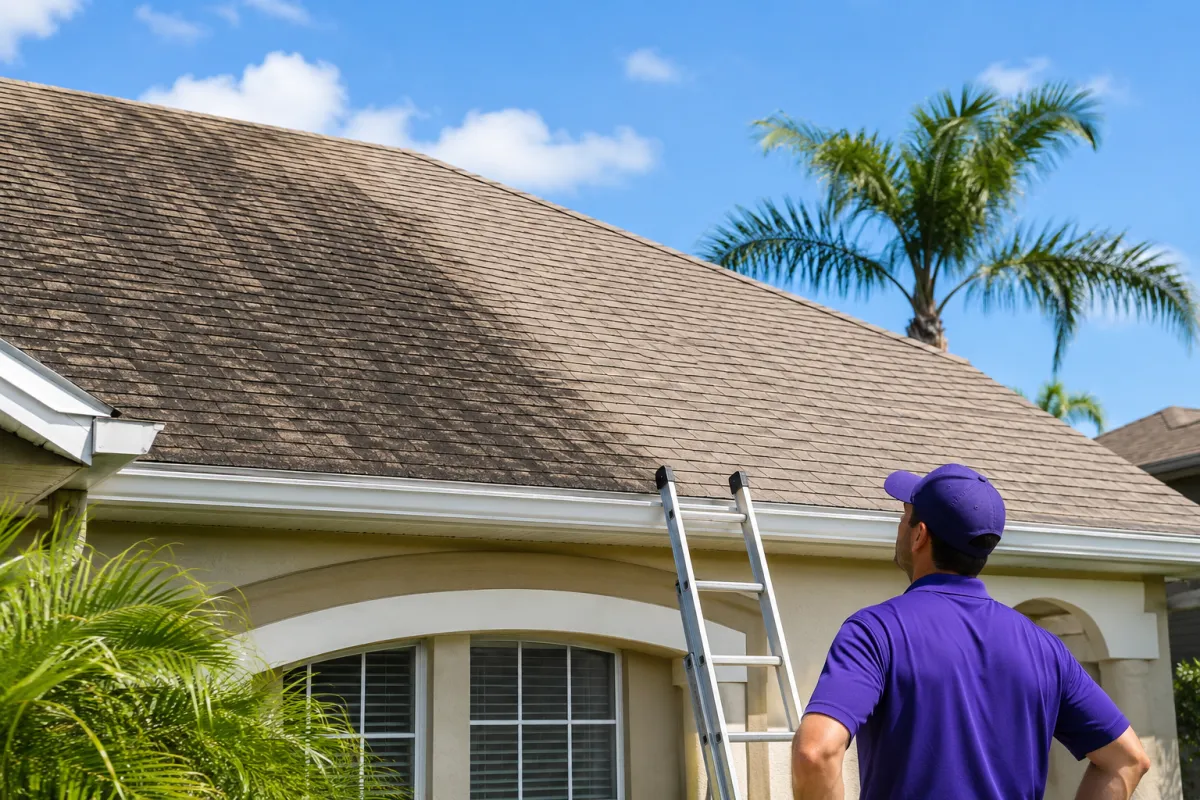
What Black Streaks on Your Florida Roof Really Mean
Black streaks on a roof can make a home look older, neglected, and even damaged. For Florida homeowners, this is a common problem. One year the roof looks fine, and the next year dark streaks begin spreading across the shingles.
Many homeowners immediately worry that the roof is failing. Others assume the stains are only cosmetic and ignore them completely.
Both reactions can be wrong.
Black streaks may not mean your roof needs replacement, but they should still be taken seriously. They are often a sign of algae or organic growth, and they can affect appearance, maintenance, and the homeowner’s ability to understand the true condition of the roof.
Why black streaks appear on Florida roofs
Florida’s climate creates ideal conditions for algae growth.
Roofs here are exposed to humidity, warmth, rain, shade, and organic debris. These conditions can allow algae to spread across asphalt shingles, especially on roof slopes that stay damp longer or receive less direct sun.
The result is the familiar dark streaking that many homeowners see from the street.
These streaks can make a roof look older than it is. They can also hide other roof issues, which is why roof inspection is important.
Are black streaks dangerous?
Black streaks are not always an emergency. In many cases, they are more of a maintenance and curb appeal issue than a sign of immediate roof failure.
However, they should not be ignored forever.
Organic growth can hold moisture against the roof surface. It can also make it harder to see the actual condition of the shingles. If a roof is dirty and streaked, it may be difficult to identify granule loss, cracked shingles, or other aging signs.
That is why black streaks should lead to evaluation, not panic.
Do black streaks mean the roof needs replacement?
Not usually.
A stained roof may still have years of useful life left. Unfortunately, some homeowners see stains and assume replacement is necessary. In other cases, contractors may use the roof’s appearance to push a replacement conversation too quickly.
The better first step is a professional roof inspection.
The inspection can help determine whether the roof is simply stained, whether cleaning is appropriate, whether shingles are aging, or whether deeper roof concerns exist.
Why softwash is the right cleaning method
If the roof is a good candidate for cleaning, softwash roof cleaning is usually the preferred approach.
Pressure washing can damage shingles by removing protective granules or loosening materials. Softwashing uses low pressure and the right cleaning process to treat algae and staining without aggressively blasting the roof.
This matters because the goal is not just to make the roof look better. The goal is to clean it in a way that supports roof preservation.
A clean roof can improve curb appeal and make future inspections more accurate.
Black streaks and curb appeal
A roof is one of the largest visible surfaces on a home. When it is covered in black streaks, the whole property can look less maintained.
This matters for homeowners, sellers, realtors, investors, and property managers. A dirty roof can create the impression that the home has bigger problems, even when the roof itself may still be in decent condition.
Improving roof appearance through safe softwash roof cleaning can help restore confidence in the property.
When stains may hide bigger issues
While black streaks are often related to algae, homeowners should still be cautious. Staining can sometimes hide or accompany other concerns such as:
Granule loss,
Brittle shingles,
Lifted edges,
Damaged flashing,
Poor drainage,
And aging roof materials.
This is why cleaning without inspection is incomplete. You do not want to make the roof look better while missing real problems.
Roof Saver Florida’s approach is to inspect first, clean or preserve where appropriate, and help the homeowner avoid unnecessary replacement when possible.
Can roof rejuvenation help after cleaning?
In some cases, once the roof is cleaned and evaluated, the homeowner may learn that the shingles are aging but still structurally sound. That may open the door to a roof rejuvenation conversation.
Rejuvenation is not a cleaning product. It is a preservation treatment for eligible asphalt shingles. But cleaning may be part of the process of preparing the roof and understanding its true condition.
This is why black streaks should be seen as a signal to evaluate the roof, not as a final diagnosis.
Final thought
Black streaks on a Florida roof do not automatically mean the roof is failing. They often point to algae, moisture, and maintenance needs.
But they should not be ignored.
A stained roof can hurt curb appeal, hide real aging signs, and create confusion about roof condition. The smart move is to schedule a roof inspection, determine whether softwash roof cleaning is appropriate, and explore preservation options if the roof qualifies.
You may not need a new roof. You may need better information.
Ready to get clarity on your roof? Visit stoproofreplacement.com to schedule your roof inspection with Roof Saver Florida.
If you want to learn more about Roof Saver Florida and the products behind our roof preservation approach, visit Roofsavermagazine.com.


