How to Prepare Your Roof for Hurricane Season in Florida
In Florida, hurricane season is not a surprise. It is a recurring reality.
Every year, homeowners know the storms are coming. The only uncertainty is how severe the season will be, when the first major weather event will develop, and whether their home is actually ready when that moment arrives. Most people track the forecast. They watch the cone. They pay attention to storm alerts. But many make one expensive mistake: they prepare too late.
By the time the first serious storm warning appears on a phone screen, most roofing decisions have already been made for them.
If the roof is weak, aging, brittle, poorly maintained, or already compromised at key points, there is very little a homeowner can do at the last minute to meaningfully improve performance. That is why smart Florida homeowners do not wait for the first named storm or the first weather alert. They prepare before the season becomes urgent.
Your roof is your home’s first line of defense during hurricane season. It is the surface that takes the pressure of wind uplift, rain intrusion, debris impact, and prolonged weather stress. And when roofs fail in a storm, they rarely fail all at once without warning. In many cases, they fail first at weak points that were already there.
That is why roof preparation before hurricane season is not a luxury. It is one of the most practical risk-reduction steps a Florida homeowner can take.
Why roofs fail during hurricanes
A lot of homeowners imagine hurricane roof damage as something random. A powerful storm hits, and the roof either survives or it does not. That is not how it usually works.
Roof systems tend to fail at vulnerable areas first.
That may include:
brittle or aging shingles,
loosened seal strips,
exposed or lifted shingle edges,
flashing that has separated or weakened,
penetrations around vents or pipe boots,
prior repairs that were never fully corrected,
or sections of roof decking that have already started to soften.
Once wind finds an entry point, pressure changes fast. If a shingle edge is already vulnerable, uplift can get underneath it. Once that happens, nearby shingles become more exposed. What started as a small weakness can quickly expand into a bigger failure pattern.
Florida roofs are especially vulnerable to this because they age under harsh conditions. Heat, UV exposure, moisture, algae growth, and repeated weather cycles all work against the roof year after year. So when a hurricane finally arrives, the storm is often not creating the weakness from scratch. It is exploiting weaknesses that were already present.
That is the key idea homeowners need to understand.
Why pre-season preparation matters more than last-minute panic
Once a storm is approaching, roofing options shrink fast.
Contractors get booked up. Materials get delayed. Inspection windows narrow. Homeowners rush into decisions. And anything that does get done under time pressure is often more expensive, less strategic, and harder to schedule.
That is why pre-season preparation matters.
A homeowner who prepares before hurricane season has more control. There is time to inspect the roof properly, time to identify weaknesses, time to make focused repairs, and time to document the roof’s condition before severe weather becomes a crisis.
That is very different from trying to solve roofing concerns three days before a storm.
The best time to prepare a roof for hurricane season is when the sky is still clear and the homeowner still has options.
Step 1: Start with a professional roof inspection
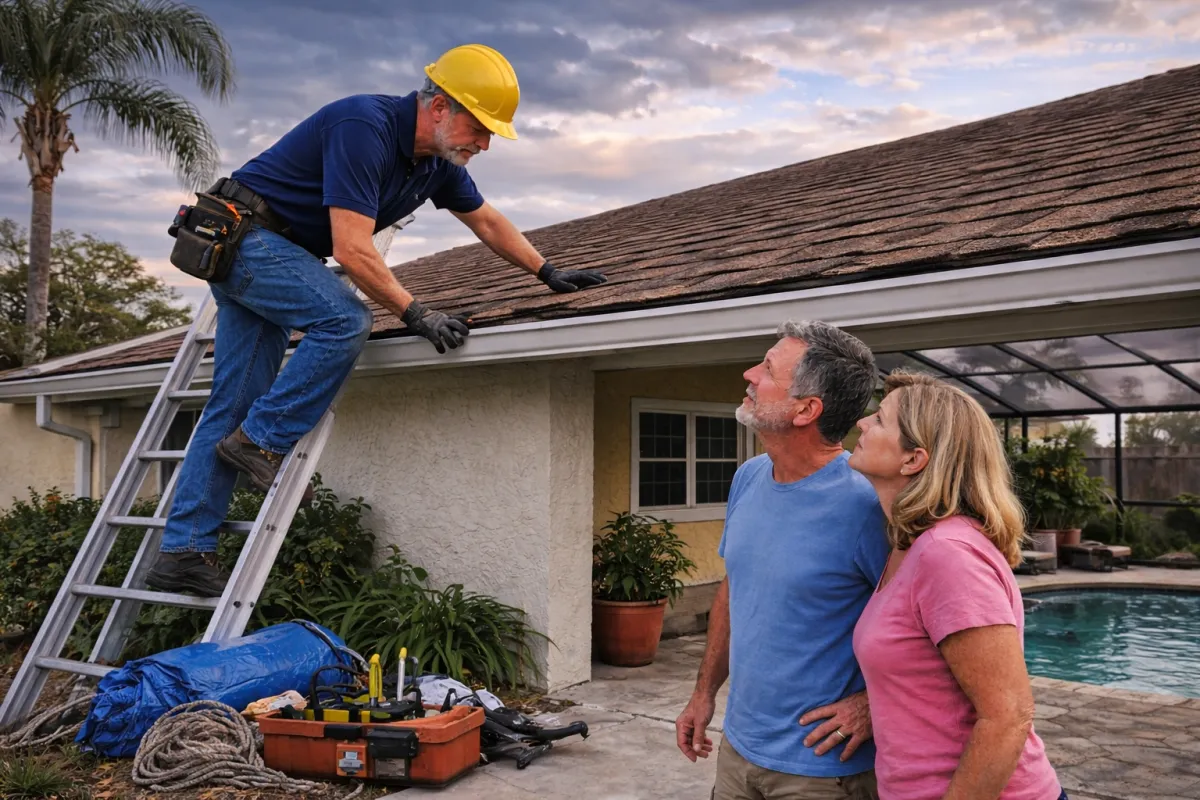
If you want to prepare the roof properly, start with a professional roof inspection.
This is the foundation of smart hurricane preparation because you cannot protect what you have not evaluated. Many homeowners assume the roof is fine because there is no visible leak inside the home. That is weak logic. A roof can have vulnerable shingles, compromised flashing, penetration issues, seal strip deterioration, and early wear patterns long before a visible interior leak appears.
A pre-season roof inspection should look for:
loose, lifted, or damaged shingles,
nail pops,
exposed fasteners,
weakened flashing,
penetration issues around vents and pipes,
ridge cap concerns,
soft spots or decking concerns where visible,
and signs of moisture intrusion or accelerated aging.
The goal is not to create panic. The goal is to identify weak points before hurricane winds find them first.
This is one of the smartest things a Florida homeowner can do because the cost of finding a minor issue in advance is usually far lower than dealing with storm-related damage after it worsens.
Step 2: Handle minor repairs before they become storm entry points
Small roof issues become big hurricane problems.
That loose shingle that seems harmless in normal weather becomes much more dangerous when high winds hit. That slightly lifted flashing detail around a vent may not seem urgent in dry conditions, but once wind-driven rain enters the equation, it can turn into a real leak path. That neglected prior repair can become the first place the storm exploits.
This is why minor repairs should be taken seriously before hurricane season starts.
Common pre-season corrections may include:
replacing compromised shingles,
securing loose roof components,
resealing or correcting flashing details,
addressing vulnerable penetrations,
and fixing small issues that would otherwise become wind entry points.
The mistake many homeowners make is assuming a “small” roofing issue can wait because it has not caused interior damage yet. That is backward thinking in Florida. During hurricane season, the relevant question is not whether the issue is large today. The relevant question is whether the issue becomes dangerous under storm conditions.
Step 3: Pay attention to shingle condition and flexibility
This is one of the most overlooked parts of hurricane preparation.
Asphalt shingles are not meant to stay in the same condition forever. Over time, they age, dry out, and lose flexibility. In Florida, that process often accelerates because of constant sun exposure and heat.
When shingles lose elasticity, they become more brittle. Brittle shingles are more vulnerable under stress. They may crack more easily, respond poorly to uplift pressure, and perform worse under aggressive wind conditions than shingles that are still pliable and in better condition.
That does not automatically mean the roof needs replacement. But it does mean the roof’s condition needs to be understood properly.
If a roof is structurally sound but aging, and the shingles are showing signs of drying or weathering, this is where a broader preservation conversation may become relevant. Depending on condition, a homeowner may want to discuss options such as roof rejuvenation as part of a roof-preservation strategy.
What matters is that the conversation happens from evidence, not from assumption. The roof must be evaluated honestly. Some roofs may need correction. Some may need replacement planning. Some may still be good candidates for preservation-oriented approaches.
The point is that homeowners should not ignore shingle condition just because the roof is not currently leaking.
Step 4: Clean the roof surface and improve water management
Hurricane prep is not only about wind. It is also about water.
Florida storms bring heavy rain, and roofs need to shed that water efficiently. When debris builds up, algae growth becomes excessive, or gutters are clogged, water management suffers. That increases stress on the system when the weather gets aggressive.
Before hurricane season, homeowners should:
remove roof debris,
clear leaves and buildup from valleys and drainage areas,
clean out gutters and downspouts,
inspect drainage paths,
and trim overhanging branches where appropriate.
This is basic roof maintenance, but it matters more than many people realize.
Debris can trap moisture and create areas of prolonged dampness. Clogged gutters can lead to overflow and water backup during heavy rainfall. Tree branches can break, scrape surfaces, or increase the chance of impact damage during storms.
A roof does not need to be dirty or visibly neglected to be unprepared. Sometimes a roof simply has too many small maintenance issues that become amplified once severe weather arrives.
Step 5: Check roof penetrations and flashing carefully
Roofs do not only fail in wide open sections. They often fail first at transitions and details.
That includes:
plumbing vents,
attic vents,
flashing transitions,
ridge cap details,
chimneys where applicable,
and other penetrations or termination points.
These are high-risk areas because they interrupt the continuity of the roof system. If flashing is loose, sealants have aged out, or a penetration detail is deteriorating, wind-driven rain can exploit that weakness much faster during a hurricane than during normal conditions.
This is why a pre-season roof inspection must pay attention to penetrations and flashing, not only to shingles in the field of the roof.
A roof can look mostly fine from the ground and still have vulnerable details that become the real source of storm-related leaks.
Step 6: Document the condition of the roof before storm season
This is one of the simplest and most underrated things a homeowner can do.
Before hurricane season intensifies, take clear photos of:
each roof slope if visible,
flashing areas,
ridge caps,
penetrations,
gutters,
and any visible condition concerns.
If a storm later causes damage, pre-storm documentation can be useful for showing the roof’s prior condition. It also helps the homeowner understand what changed after the event instead of relying on memory during a stressful moment.
Documentation does not prevent damage, but it improves clarity. And clarity matters when evaluating post-storm conditions.
Why waiting until storm season is expensive
Homeowners who delay preparation usually pay for that delay in one of four ways:
higher emergency repair costs,
longer wait times for contractors,
temporary rather than strategic fixes,
and much higher stress during active weather events.
That is the real cost of waiting.
Emergency roofing during storm season is harder to schedule, more chaotic, and often driven by urgency instead of quality decision-making. A homeowner who prepared in advance has fewer unknowns and fewer avoidable surprises.
That peace of mind matters.
How Roof Saver Florida fits into hurricane prep
Roof Saver Florida is well positioned for this conversation because the right hurricane prep strategy is not built around panic. It is built around condition awareness, roof inspection, targeted corrections, and preservation-minded decision-making.
The goal is not to wait for storm damage and then react. The goal is to identify vulnerabilities before they become claim-worthy problems.
That may involve:
a pre-season roof inspection,
localized corrections,
stronger roof maintenance habits,
a review of aging shingle condition,
and where appropriate, a discussion around roof rejuvenation or broader roof preservation planning.
That kind of process is much more useful than pretending every roof is either perfect or doomed. The truth is usually somewhere in between, and that is exactly why preparation matters.
What smart Florida homeowners do differently
Smart Florida homeowners do not assume roof problems will wait until after storm season.
They do not rely only on luck.
They do not confuse “no visible leak” with “storm ready.”
And they do not wait until the weather alert goes out to wonder whether their roof is vulnerable.
Instead, they act earlier.
They inspect.
They correct small problems.
They clean and prepare the roof surface.
They pay attention to aging materials.
They improve water management.
And they reduce the number of weak points that a hurricane can exploit.
That is not fear-based. That is disciplined homeownership.
Final thought
You cannot control hurricane season.
You cannot control how active the tropics become, how strong the winds get, or whether a storm will track toward your area. But you can control whether your roof enters that season neglected or prepared.
Most major roof damage during hurricanes does not begin as pure bad luck. It begins where weakness already existed.
That is why the best time to prepare your roof is before the first storm warning, before the first panic decision, and before severe weather forces your options to narrow.
If you live in Florida, look up before the season does it for you.
Ready to get clarity on your roof? Visit stoproofreplacement.com to schedule your roof inspection with Roof Saver Florida.
If you want to learn more about Roof Saver Florida and the products behind our roof preservation approach, visit Roofsavermagazine.com.


