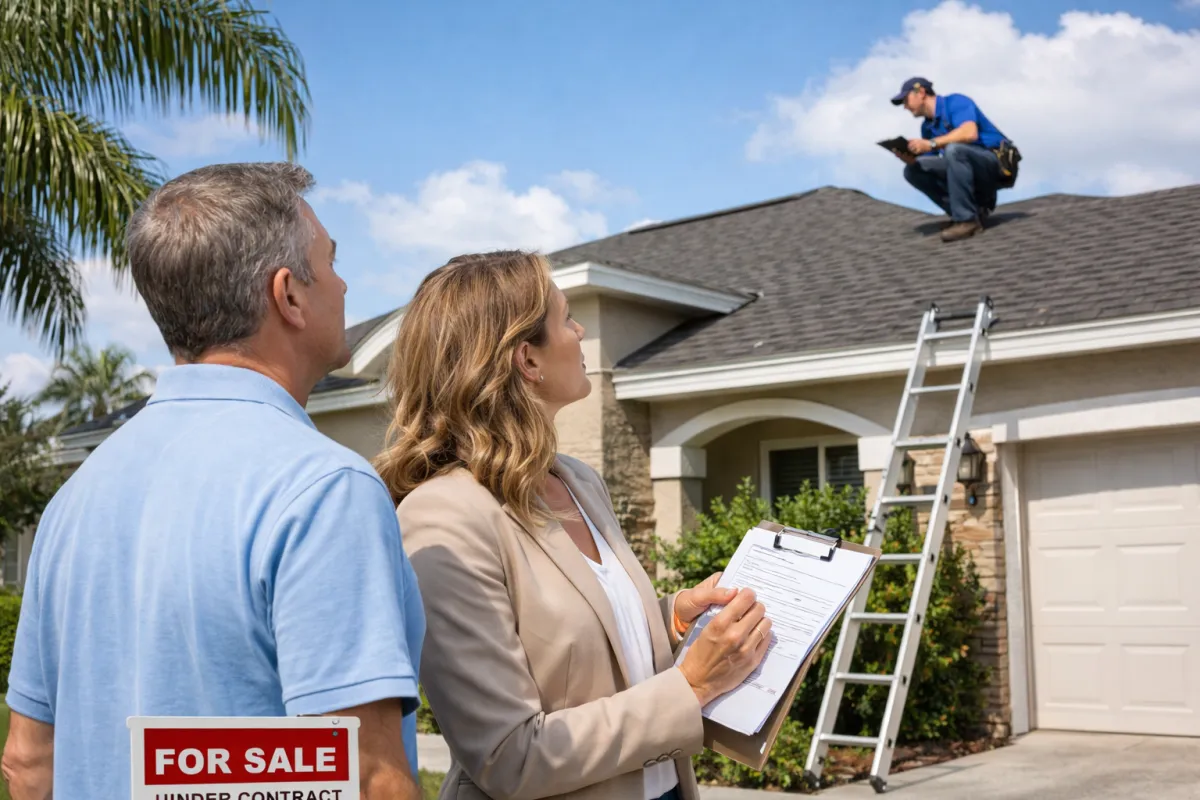
How Roof Issues Can Delay a Home Sale in Orlando
In real estate, the roof is often ignored until it becomes a deal problem. That is when sellers, agents, buyers, and insurers all start focusing on it at once, usually under time pressure. In Orlando, that can create exactly the kind of friction that slows down a sale, weakens negotiating position, or causes a transaction to fall apart altogether.
A roof concern can delay a home sale in more ways than most sellers realize. It is not only about whether there is a leak. It is about perception, inspection findings, underwriting concerns, repair requests, buyer hesitation, and the credibility of the answers being given once the issue is discovered.
For Orlando homeowners planning to sell, and for agents trying to keep deals moving, the roof should not be treated as a last-minute surprise. It should be treated as a transaction risk variable that needs clarity early.
Why roofs become deal friction fast
When a house goes under contract, the roof becomes one of the first major components to come under scrutiny. Buyers want to know if they are inheriting a major expense. Inspectors look for visible concerns. Insurance-related questions may arise if the roof appears older or shows wear. Once that happens, the transaction enters a new phase.
At that point, the roof is not just part of the house. It becomes a negotiating issue.
Even a roof that is not actively leaking can create concern if it looks aged or if the buyer hears conflicting information from an inspector, insurance representative, contractor, or agent. That uncertainty is what causes delay. Buyers dislike uncertainty, lenders dislike uncertainty, and insurance-related uncertainty can become especially disruptive.
Common ways roof issues affect an Orlando sale
There are several ways roof issues can interfere with a transaction:
1. Inspection findings create concern
A home inspector may flag roof wear, visible aging, repairs, soft spots, questionable flashing, or concerns around penetrations. Even if the notes are general, those comments can trigger buyer anxiety.
2. Buyers ask for credits or repairs
Once roof concerns appear in the inspection report, buyers may request concessions, repairs, or full replacement. Even when those requests are not technically justified, they can still become negotiation leverage.
3. Insurance becomes a variable
In Florida, insurance questions can quickly complicate closing timelines. If the buyer’s carrier requests additional information or raises concerns about roof age or condition, the deal may slow down while everyone scrambles for documentation and answers.
4. Multiple contractors create conflicting opinions
One contractor says the roof needs replacement immediately. Another says it may still have usable life. A third focuses only on visible cosmetic wear. The seller and buyer are left trying to interpret contradictory advice while the contract deadline keeps moving closer.
5. The buyer loses confidence
Even when the issue is manageable, perception matters. If the roof becomes a source of confusion or fear, the buyer may start to wonder what else is wrong with the property.
Why waiting until the transaction is active is a mistake
Many sellers do not think about the roof until after the home is listed or under contract. That is reactive and weakens negotiating position. Once a buyer raises the issue, the seller is already on defense.
The smarter approach is to understand the roof before it becomes a negotiation point. That does not necessarily mean replacing it. It means getting real information before the buyer’s side controls the narrative.
When the seller already knows the roof’s condition and has documentation or an inspection-based assessment, the conversation changes. The seller can respond with confidence rather than scrambling under pressure.
The problem with replacement-first thinking in real estate
One of the worst outcomes in a transaction is when a roof concern appears and the first contractor called is someone whose only real answer is replacement. That can unnecessarily inflate the problem, create buyer fear, and force the seller into a high-cost decision that may not be the only path.
Real estate transactions need clarity, not exaggeration.
A roof issue may involve localized repairs, penetrations, flashing, weathering, maintenance-related concerns, or condition factors that require proper evaluation before anyone jumps to the most expensive conclusion. A replace-first recommendation may serve the contractor, but it does not always serve the transaction.
Why realtors should care about roof strategy
For agents in Orlando, roof strategy is part of deal strategy. When a roof becomes an issue late in the process, the agent’s job gets harder. Time is lost, communication becomes messy, and the transaction becomes more emotional.
Agents who understand the role of pre-listing roof evaluation gain a real advantage. They are better positioned to:
identify potential issues before buyers do,
manage seller expectations,
reduce last-minute surprises,
and preserve deal momentum.
A roof strategy is not just a maintenance decision. It is a sales process decision.
What a seller should do before listing
If the home has an older roof or visible wear, it is worth taking a proactive step before the listing becomes active. That does not mean overreacting. It means being strategic.
A seller should consider:
having the roof evaluated before listing,
identifying whether any issues are isolated or widespread,
addressing obvious minor problems where appropriate,
understanding how the roof may be perceived by buyers,
and preparing documentation that creates confidence rather than confusion.
This is especially helpful in Orlando where transaction speed can be slowed by insurance-related questions and contractor inconsistency.
How Roof Saver Florida fits the transaction conversation
Roof Saver Florida is relevant to sellers and agents because the company’s approach is built around roof evaluation, education, and practical decision-making. That matters in a transaction where the wrong kind of roofing contractor can make the process worse by escalating everything into a replacement emergency.
A better approach is inspection-first. What is the actual condition? What are the weak points? Is there active leakage? Are the issues localized? What would help reduce buyer concern? Those are the questions that support closings.
For sellers, this kind of approach can protect leverage. For agents, it can protect deal flow. For buyers, it can create more confidence in the information being presented.
Why roof clarity protects price and timing
Every time uncertainty enters a real estate transaction, leverage shifts. If the buyer thinks the roof is a major unknown, they may ask for credits, delays, price reductions, or post-inspection concessions. Some of those requests may be reasonable. Some may be opportunistic. Either way, the seller’s position weakens if there are no clear answers.
By contrast, when the seller has already taken a proactive approach and can present inspection-based information, the negotiation becomes more grounded. Instead of vague fear, the parties can talk about actual findings.
That is how roof clarity helps protect both price and timing.
Final thought
Roof issues can absolutely delay a home sale in Orlando, but the delay usually does not come from the roof alone. It comes from uncertainty, conflicting opinions, and a lack of preparation.
Sellers who wait until the buyer raises the issue are already late. Sellers who evaluate early and respond with facts give themselves a much better chance of keeping the transaction moving.
Call to Action: Ready to get clarity on your roof? Visit stoproofreplacement.com to schedule your roof inspection with Roof Saver Florida.
If you want to learn more about Roof Saver Florida and the products behind our roof preservation approach, visit Roofsavermagazine.com.


