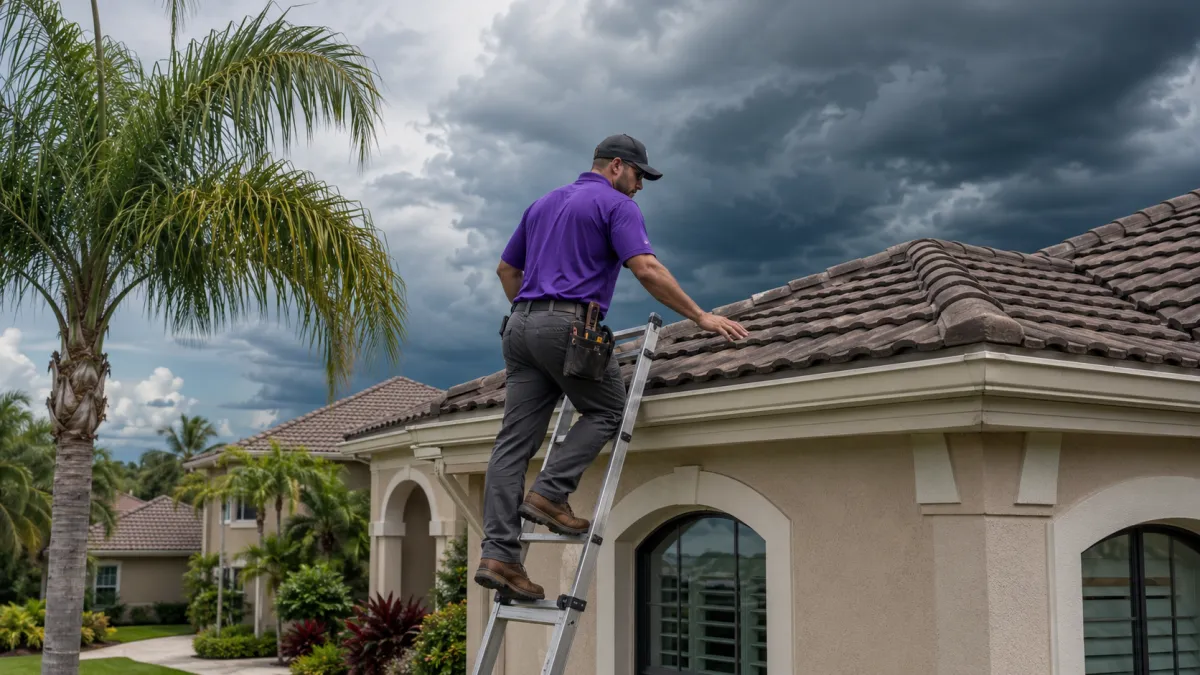
Florida Hurricane Roof Prep: What Homeowners Should Do Before the Storm
In Florida, hurricane preparation should start before the first storm warning.
Many homeowners buy supplies, review forecasts, and think about shutters. But they forget the most important protective surface on the home: the roof. Your roof is the first line of defense against wind, rain, and flying debris. If it already has weak points, hurricane conditions can expose them quickly.
That is why hurricane roof preparation is not something to leave for the last minute.
Why roofs fail during storms
Roofs rarely fail randomly. In many cases, they fail first where weakness already exists.
Common weak points include loose shingles, brittle shingles, worn flashing, damaged pipe boots, clogged gutters, prior repairs, exposed fasteners, and soft decking concerns. Once wind finds an entry point, uplift pressure can increase and a small issue can turn into a larger failure.
That is why a pre-season roof inspection before hurricane season is one of the smartest moves a Florida homeowner can make.
Start with inspection
A professional inspection helps identify roof vulnerabilities while there is still time to address them. A quality inspection should review:
Shingle condition,
Flashing,
Penetrations,
Ridge caps,
Valleys,
Gutters,
And visible signs of prior water issues.
This gives the homeowner a clear picture of whether the roof is storm-ready or whether focused work should happen before severe weather arrives.
Handle small problems early
Small problems become bigger under hurricane stress. A slightly lifted shingle, minor flashing issue, or weak penetration detail may not look urgent in calm weather, but once heavy wind and rain arrive, those become entry points.
That is why roof maintenance before storm season is more than routine upkeep. It is risk reduction.
Clean the roof and gutters
Water management matters just as much as wind resistance. Gutters should be clear, downspouts should flow properly, and branches hanging over the roof should be trimmed where appropriate. Debris on the roof can trap moisture and create unnecessary problems.
Document the roof condition
It is also smart to document the roof before storm season intensifies. Clear photos of slopes, flashing areas, gutters, ridge caps, and visible conditions can help if damage later needs to be evaluated.
Think about preservation too
If the roof is aging but still structurally sound, the homeowner may also want to ask whether roof rejuvenation or another preservation strategy makes sense. Brittle shingles can be more vulnerable when storm stress arrives.
Final thought
You cannot control hurricane season, but you can control how prepared your roof is before it begins. A proactive inspection, minor repairs, cleaning, and preservation planning can reduce risk and help homeowners feel more confident before the weather turns serious.
Ready to get clarity on your roof? Visit stoproofreplacement.com to schedule your roof inspection with Roof Saver Florida.
If you want to learn more about Roof Saver Florida and the products behind our roof preservation approach, visit Roofsavermagazine.com.


