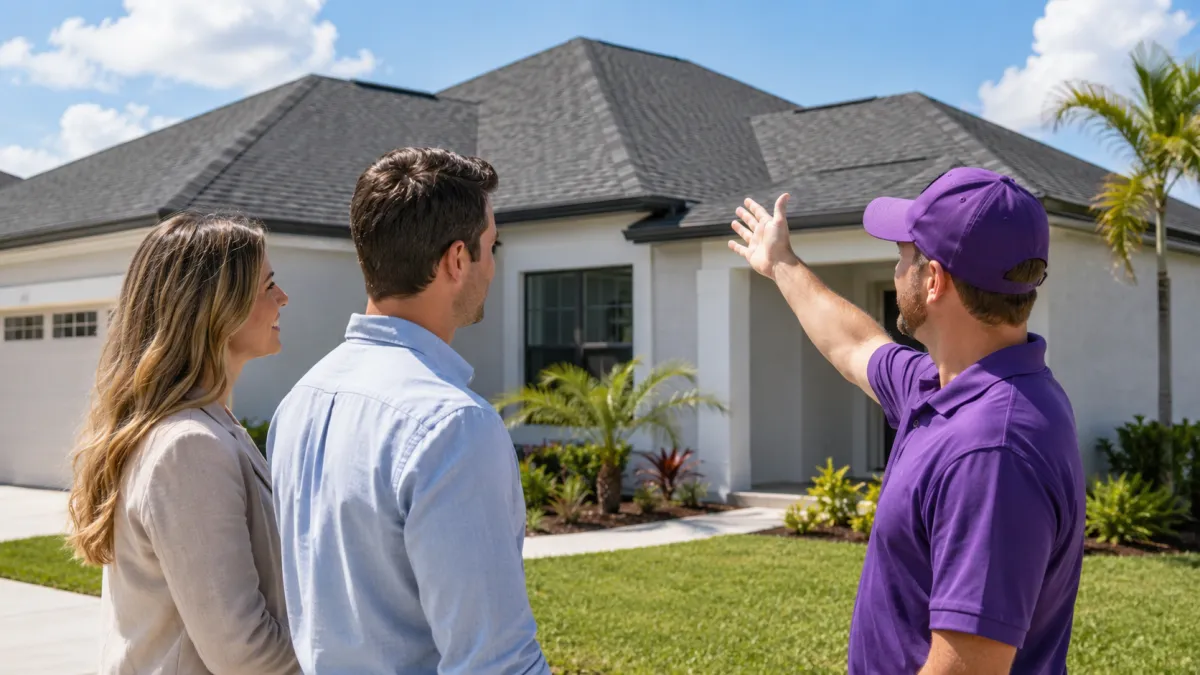
How Realtors Can Prevent Roof Problems From Delaying Closings in Florida
For Florida realtors, roof issues are not just construction problems. They are transaction problems.
A roof concern discovered late in the process can slow momentum, create buyer anxiety, trigger renegotiation, delay insurance conversations, and put closing dates at risk. Even when the issue is manageable, the timing can make it feel bigger and more stressful than it needs to be.
That is why realtors who understand the roof conversation are in a better position to protect deals.
This does not mean realtors need to become roofing experts. It means they need to recognize when roof condition may become a transaction risk and encourage the right evaluation early enough to prevent chaos.
Why roof issues create so much friction
The roof is one of the most expensive visible systems on a home. Buyers know this. Sellers know this. Agents know this. That is why even a small roof concern can create a large emotional response.
When a buyer sees comments about lifted shingles, granule loss, flashing concerns, or roof age, they may immediately start thinking about replacement costs. The seller may feel blindsided. The agents may begin negotiating under pressure. Everyone starts trying to solve a problem on a deadline.
In Florida, this concern is magnified because the roof is tied to weather exposure, hurricane readiness, long-term maintenance, and sometimes insurance-related questions.
This is why a real estate roof inspection can be so valuable before the transaction reaches a crisis point.
The problem with waiting for the buyer’s inspection
Many transactions rely on the buyer’s general home inspection to surface roof issues. That is common, but it is not always strategic.
A general home inspector may identify visible concerns and recommend further evaluation. Once that happens, the clock is already running. Inspection periods, repair requests, financing timelines, and closing deadlines all create pressure.
A realtor who encourages earlier roof clarity can help avoid this pattern.
For sellers, that may mean a pre-listing roof inspection before the home hits the market. For buyers, it may mean bringing in a roofing professional quickly if the roof appears older or if the inspection report raises concerns.
The earlier the roof conversation happens, the easier it is to manage.
How roof concerns affect buyer confidence
Buyers rarely respond calmly to uncertainty. They may accept a roof that has documented condition and a clear plan. They may also accept minor repairs if the scope is understandable. What they struggle with is ambiguity.
When a report says the roof needs further evaluation, but no one can explain how serious the issue is, doubt spreads quickly.
That doubt can lead to larger repair requests, credits, price reductions, delayed decisions, or terminated contracts.
Realtors can protect confidence by helping the parties move from vague concern to specific information.
What realtors should watch for
A realtor does not need to inspect the roof personally, but there are visible clues that may justify a conversation:
shingles that look curled, brittle, lifted, or uneven,
roof stains or dark streaks,
missing shingles,
visible patches,
sagging or uneven roof planes,
gutters pulling away or overflowing,
interior ceiling stains,
or a seller who does not know the roof’s age or repair history.
Any of these can become a deal issue later.
The smart move is not to diagnose the problem. The smart move is to recommend professional evaluation.
How Roof Saver Florida supports real estate transactions
Roof Saver Florida can help realtors by providing condition-based roof evaluations that support smarter decisions. The value is in clarity.
A proper roof inspection can help determine whether the roof needs minor repairs, maintenance, preservation discussion, or replacement planning. That information can help buyers and sellers negotiate from facts instead of fear.
In some cases, the roof may be structurally sound but aging. In those situations, a roof rejuvenation conversation may be relevant if the roof qualifies. In other cases, targeted corrections may be enough to reduce immediate concerns. And when replacement is genuinely needed, the parties are better off knowing that clearly.
The point is not to force one outcome. The point is to reduce uncertainty.
Why this can help listing agents
Listing agents benefit when sellers prepare before the market exposes problems. If the roof is older or questionable, a pre-listing evaluation can help the agent guide pricing, disclosures, and negotiation strategy more intelligently.
It may also prevent a listing from going under contract only to fall apart because roof concerns were never addressed.
That is not just a seller problem. It affects the agent’s time, reputation, and pipeline.
A prepared listing is easier to defend than a surprised listing.
Why this can help buyer agents
Buyer agents benefit because they can help clients avoid emotional overreaction. When roof concerns appear, the buyer needs guidance, not panic.
A roofing professional can help determine whether the issue is minor, moderate, or serious. That allows the buyer to make a better decision about negotiation, repair requests, or moving forward.
Without that information, buyers often assume the worst.
Final thought
Florida real estate transactions move better when roof condition is understood early. Realtors do not need to solve roofing problems themselves, but they do need to know when a roof could become a closing risk.
The best agents reduce surprises. A timely real estate roof inspection can protect deals, support negotiations, and help buyers and sellers move forward with more confidence.
Ready to get clarity on a roof before it slows down your transaction? Visit stoproofreplacement.com to schedule your roof inspection with Roof Saver Florida.
If you want to learn more about Roof Saver Florida and the products behind our roof preservation approach, visit Roofsavermagazine.com.


